How life science professionals can start posting more human content on LinkedIn
If you work in life sciences, chances are you have a complicated relationship with LinkedIn. You know it matters. You see peers getting speaking invitations, interviews, or partnerships because of what they post. At the same time, you do not want to become the person writing “what my ski accident taught me about resilience in the workplace.”
For biotech CEOs, founders, and senior people in medical/scientific communications, there is an extra layer of pressure. You are visible to investors, regulators, partners, employees, and the rest of the industry. That makes starting to post on LinkedIn scary, risky, and confusing even. What if nobody cares? What if people think it is cringe? What if you say something that does not land well?
But most people on LinkedIn are spectators. They scroll, they read, and then they move on. Very few are posting regularly. That means if you are willing to show up consistently and talk about your work in a human way, you are already part of a small minority. You do not need to turn your feed into a performance. You just need to let people see how you think. This article will give you a leg up to start doing just that. And if you want to get over the fears of posting personal content, check our other blog here!
Practical tips for posting more personal, human content
When people ask how to post more personal content on LinkedIn, they usually imagine having to share their whole life. That is not what this is about. You do not need to write about your childhood trauma to make LinkedIn work for you. You just need to show more of the person who is doing the work in biotech, pharma, or communications.
Tip 1: talk about the human side of your work
Start from what you already do every day. If you are a biotech CEO, that might be fundraising, hiring, making difficult trade-offs between scientific risk and budget, or explaining complex data to non-scientific stakeholders. If you are a senior medical writer, that might be managing impossible timelines, turning messy data into a coherent story, or navigating feedback from multiple teams.
Ask yourself:
What was one moment this week that made you feel something (frustration, relief, pride, curiosity, even boredom)?
How did that feeling influence your decisions or your business, and how do you feel now about having reacted that way?
Take your answers and write them out in your own words: one or two lines describing the moment, one or two lines about how you felt and what you did next, and one line with a simple takeaway. That is already a short LinkedIn post that connects your business life with your human side.
Tip 2: share experiences, not just outcomes
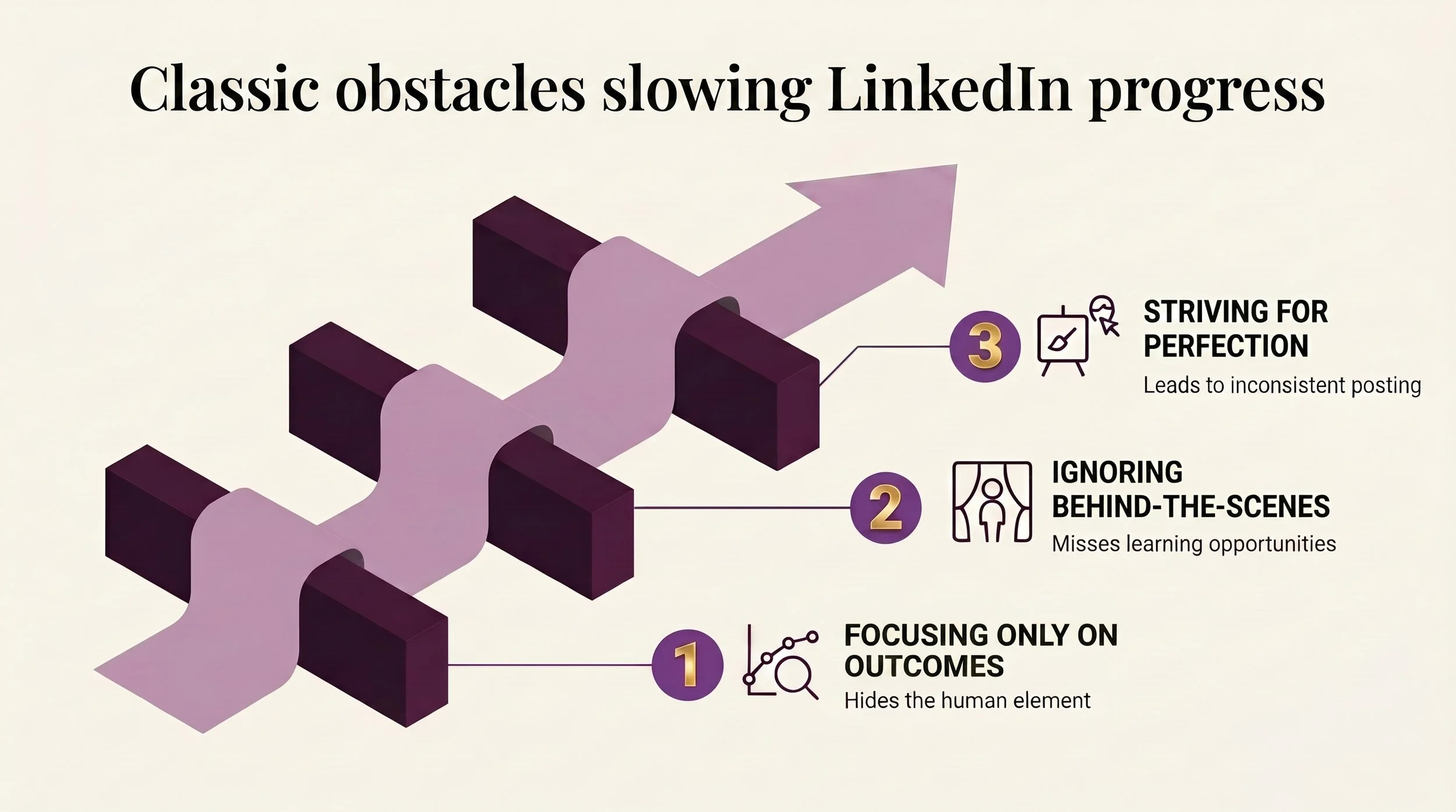
Most LinkedIn posts in life sciences look like this: “We are excited to announce X.” There is nothing wrong with that, but nobody learns who you are from a press release. If you want people to connect with you, talk more about the path than the milestone.
Ask yourself:
What is one recent win, loss, or turning point in your company or career (a funding round, a trial update, a key hire, a rejected manuscript, a partnership that did not happen)?
What actually happened behind the scenes that people never see (a difficult conversation, a decision you had to make, a moment you were not sure what to do)?
Write a post that briefly mentions the outcome, then spends most of its length on the experience around it and what it taught you for the future: what you were thinking, what surprised you, and what you learned. Hit publish and see how it feels and how it performs compared with a standard “announcement.”
Tip 3: use one weekly check-in to plan your posts
If you try to write a masterpiece every time, you will post once and disappear. Instead, give yourself a simple weekly check-in.
Once a week, on a day you choose, ask yourself:
What was the most important moment this week, and why?
How did that moment make you feel?
What is one action you took that led to a meaningful consequence, or that you think will lead to something important for the business?
Answer these questions in 100–200 words. Do not overthink the writing. That is your 1 or 2 posts for the week. If you repeat this every week, you will have a sustainable way to post consistently without needing inspiration to strike every time.
Using LinkedIn beyond posting
Posting is only half of the work, and I say that as someone who offers professional ghostwriting services. Many of the most important things that happen because of LinkedIn never appear on the feed. They happen in comments, in DMs, and in the quiet connections that grow over time.
Turn engagement into conversations
When someone likes or comments on your post, they are telling you they are open to a conversation. You do not have to pitch them anything immediately, but you also do not want to ignore the signal.
Each week:
Check who engaged with your posts, especially comments and meaningful reactions.
Reply thoughtfully, to comments that say something interesting or come from people who are relevant for your business or career. Add one extra line that moves the conversation forward instead of just saying “thank you.”
Send a short connection request and message a few of them. You can thank them for engaging, ask what they are working on, or invite them to continue the discussion in more depth.
Do not sell in the first message. The goal is to turn a public interaction into a human conversation and rapport. Over time, those conversations are what create opportunities.
Curate your feed and engage with intent
Your feed is what you make of it. Engage with what you care about, and scroll for the rest. LinkedIn will learn what you like eventually. You can also use it as a source of ideas and a way to build visibility without posting anything new.
A simple practice:
A few times per week, scroll through your feed with a clear intention: look for posts from people and companies you genuinely want to build relationships with.
When you see something meaningful, take the time to leave a comment that adds value. Share a short perspective from your position, or ask a genuine question.
If a post triggers a strong reaction, save it as a prompt. Ask yourself why it resonated and whether there is a story from your own experience that connects to it. That story can become one of your next posts.
All of this is easy to do, but hard to stick with. Try it for a week or two and you’ll see what works for you and what doesn't, then adjust according to your own wants and needs.
However, if you want to go more in-depth and create a LinkedIn plan that helps your business faster, you have two options:
Download our free 1-month LinkedIn Starter guide, with precise steps that take you from beginner to results in 30 days.
Contact us to know more about our ghostwriting or coaching programs, where we work directly with you to go from story to business outcomes, with minimal time requirements from you.
Note: You can currently access a waitlist for LinkedIn coaching and consulting, as we are opening that as a new service!