Alright, let us talk about something that has been bothering me for a while.
If you work in biotech or life sciences scientific marketing and you open LinkedIn, it’s increasingly likely that you will start seeing one type of post surface consistently: the type that tells you that LinkedIn company pages do not work and that employee or founder profiles are the way to go to reach more people.
You know what? I am done with that stance. It is reductionist bullshit. There, I said it.
Why people say LinkedIn company pages don’t work
“But Darío,” you may cry out, “are you saying that all of the evidence that has mounted up, clearly showing that founder, executive, or employee pages get much more visibility than company pages, is fake?”
No, I am not quite saying that. I am saying that we are looking at the data wrong. We are using LinkedIn company pages wrong and, especially in science and biotech, investing in LinkedIn company pages can pay off massively if you know how to do it.
The problem is most people are comparing two things: LinkedIn personal profiles and LinkedIn company pages. But the common denominator there is LinkedIn, and these pages usually focus on completely different things.
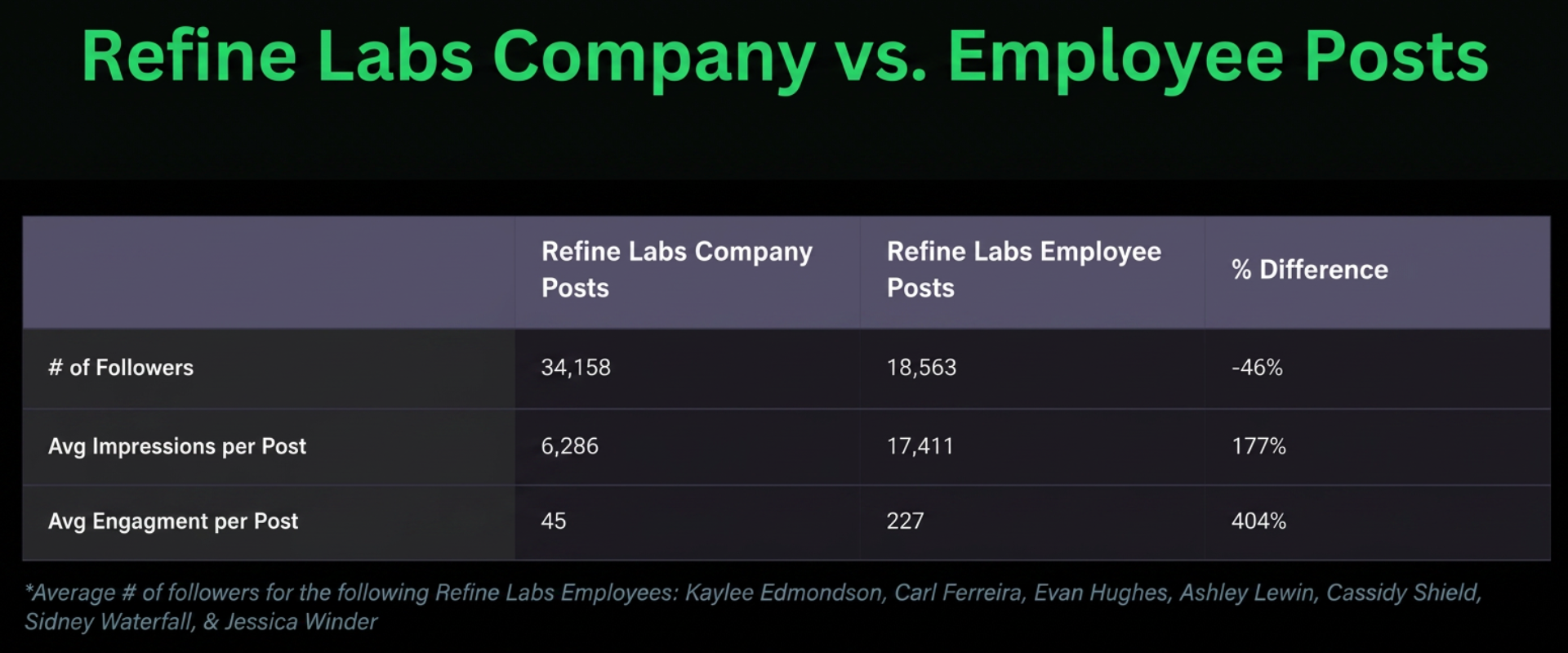
Image 1: LinkedIn company vs personal account data. Source: Refine Labs
As we know, LinkedIn is a social network. People want to connect with people and, because of that, it is very likely that some founders, CEOs, and employees will have more followers—and more people who care about them—than LinkedIn company pages.
Yes, investing in personal communications is important and is usually the right strategy (or part of it), but that does not mean that LinkedIn company pages are dead. The real question is: what do people actually post there most of the time?
Read the room, company page!
Open any biotech LinkedIn company page, and get slapped with a version of “we are happy to announce that we have gone to X conference.” Or some completely bland post with heavy marketing text, self-glazing the company to oblivion. Or incredibly promotional and salesy posts.
Now think about it and tell me: would those posts perform just as badly if a founder posts them? Of course they would! It is not a matter of whether it is a personal profile or a company page. It is simply that you are relying on a type of message that normally populates company pages and that is ineffective because no one wants to scroll through endless ads.
What I see works with biotech LinkedIn company pages
I was browsing a biotech LinkedIn company page the other day. They clearly had someone in marketing who was creating promotional images about their products. Guess how many likes they had? Some had five, some had eight, some had ten, maybe one or two comments. About 5,000 people followed this page, by the way.
Unfazed, I kept scrolling. Suddenly, there was a post with about 60 likes! Someone who had done an industrial PhD in the company and was graduating. The company had taken the time to post about their employee. That post had a ton of comments and clearly outperformed every other commercial and marketing post on the company page.
I kept scrolling a bit more and saw that the team had participated in a local running competition. The company had posted about that and, again, that post had much higher engagement and more comment than any of the marketing posts on the company page.
Who could have thought? The same approach that works for employees and founders—posting personal content instead of mindless, performative, salesy marketing—also works for company pages on the same social network. No one could have predicted that! (Sarcasm mode = on).
When LinkedIn company pages can be better than founder or employee pages
Around the same time, I had done some work for a client, another biotech company doing molecular diagnostics. I wanted to check out their current scientific marketing and communications set-up, and see if it made sense to recommend some of our other services. Things like:
Ghostwriting for their executives
Creating content for the company page
Helping them with their website
The company had raised several million dollars recently, and the company page had over 1,000 followers. On the other hand, the founders were completely inactive on LinkedIn, with the biggest account having just about 300 followers.
Let’s be honest: this was a new company, and it was clear that people had some form of interest in it because their company page had a decent number of followers and they had raised decent money. Their founders were just not active on LinkedIn.
If you were me, which service would you suggest for them? Ghostwriting for a personal account with 300 followers would probably end up being a waste of time and money. On the other hand, creating some content every month for a company page—to keep those 1,000 people engaged and share meaningful posts about the company’s mission, how their science works, and yes, even their founders and staff—seems, at least to me, a much better option.
LinkedIn company pages still matter for scientific marketing
At the same time, I have worked with clients ghostwriting for them on LinkedIn, and I am a big advocate of founders and executives creating more personal content on the platform. But that means they are not going to be permanently selling the products or services the company offers, and they are not going to be doing in-depth explanations of the company’s scientific work.
It is great if that kind of content can live somewhere else, somewhere like the company page.
In several cases, I have suggested that they share content that mostly communicates their science from their LinkedIn company pages, and it has worked wonders, racking up thousands and thousands of impressions and quite a lot of likes.
For biotech and life science companies, those LinkedIn company page posts can focus on:
How your assays or platforms actually work
The scientific rationale behind your product/service
Case studies that you cannot fully explain in a short founder post
Team stories that show the humans behind your labs
These posts, which don’t have to be overly commercial, will never achieve the virality of a founder’s personal post, but they are also not supposed to. They allow founders and executives to be less salesy and funnel interested people to their company page, where posts can better explain the scientific side of the company or their services and products.
Even if few people read them, those people have actually declared their interest by following the company page, so why not talk about it?
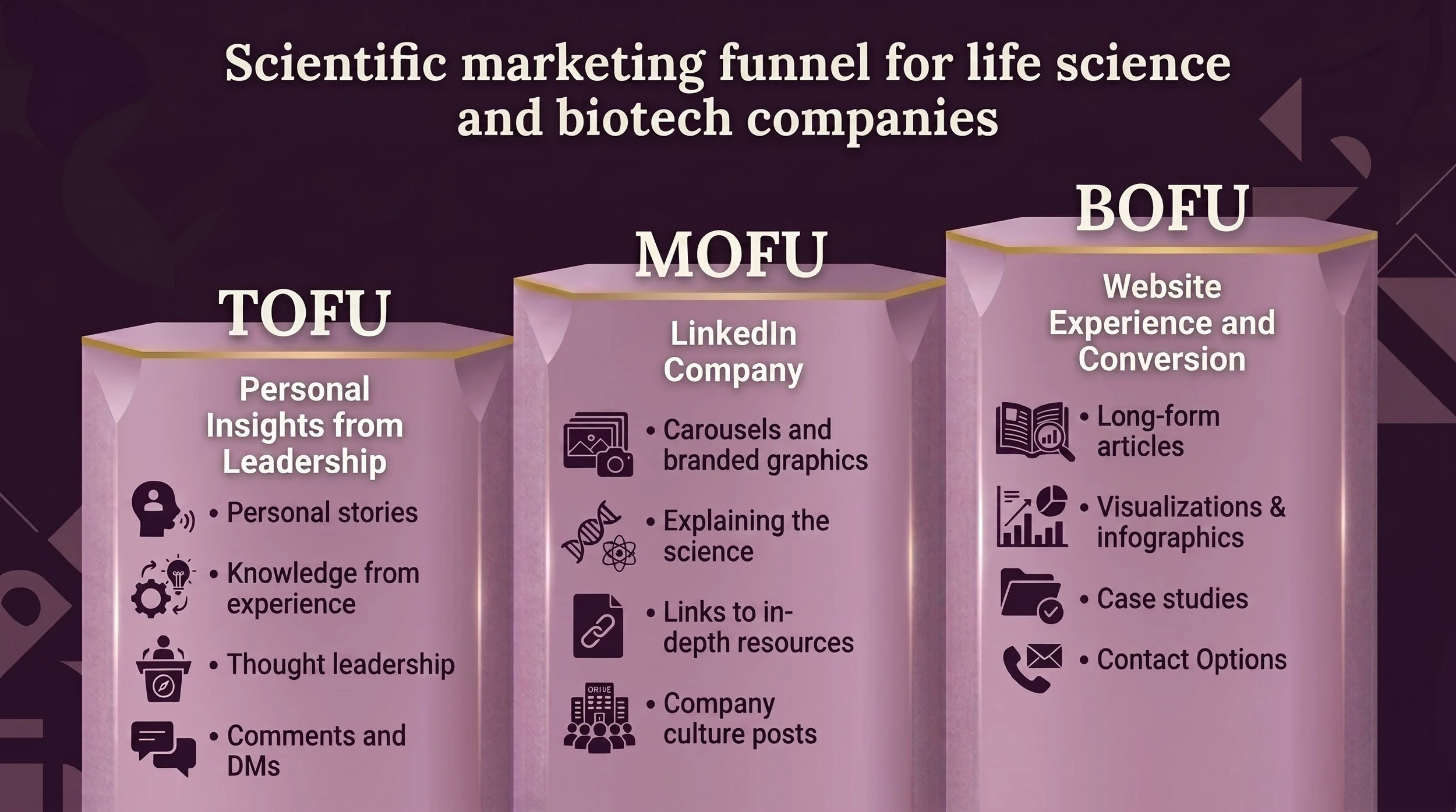
Image 2: An example of what role LinkedIn company pages can have in scientific marketing funnels
Use LinkedIn company pages alongside founder profiles
With all this said, I think my point is becoming quite clear: LinkedIn company pages are not dead. People scroll through LinkedIn because they want to see personal content from professionals, not endless ads.
While, in many cases, LinkedIn company pages will have lower reach, in scientific areas like biotechnology that does not mean they are useless. Using them the right way—to support personal content, create community, explain science in-depth, and use them as a part of the funnel—can still be very effective for scientific marketing efforts.
Some simple ways to combine both:
Use founder or executive profiles to reach new people and build trust
Use the life science LinkedIn company page to host deeper scientific content and company news
Cross-link between both: founders and employees mention the company page, the company page highlights founder/employee stories and milestones
If all of this does not convince you, here is a final reminder: LinkedIn personal pages also perform terribly on average. In fact, if you have about a thousand followers, your average posts will have around 300 impressions and reach fewer than 200 people.
When we are discussing professional services like our scientific writing services at Helixa Communications, we are not aiming for the average. I routinely manage to get the posts that I ghostwrite for founders and executives into the top 10% of reach for their follower quantity, and often into the top 1% or even 0.1%. A founder with less than 2,000 followers got one of my posts to reach 75,000 impressions. That is more than 20 times the average.
Yes, the average LinkedIn company page might not do very well on average, but if you hire professional services and settle for average, you are already doomed.
So there you go. Use company pages, but use them well. And if you doubt whether it’s a good choice or not, or need help making biotech or life science company pages work, send us a message. We offer free discovery calls to see if we can help you, and how.